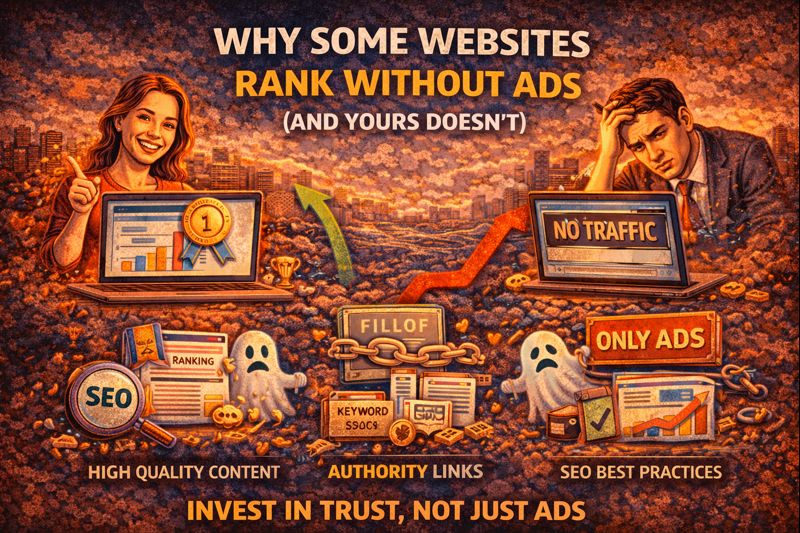
Introduction: The Unfair Advantage You Keep Noticing
You’ve seen it happen.
Some websites appear on Google again and again—without running ads.
Meanwhile, your site struggles even after spending money or trying SEO basics.
It feels unfair.
But it’s not luck, favoritism, or secret connections.
👉 Websites that rank without ads follow a fundamentally different approach to visibility.
Once you understand what they do differently, organic rankings stop feeling mysterious.
What Ranking Without Ads Really Means
Ranking without ads means earning organic visibility—appearing on Google because your content deserves to be there.
Google ranks these websites because they:
- Solve specific problems clearly
- Match search intent precisely
- Build trust over time
- Offer a better experience than competitors
Real-world example:
A blog answering a specific “how-to” question often outranks companies spending thousands on ads—because it satisfies the searcher instantly.
Why Some Websites Rank Organically While Others Don’t
1. They Understand Search Intent Better
Ranking websites don’t chase keywords—they solve intent.
They know whether the user wants:
- Information
- Comparison
- Guidance
- A clear answer
Misaligned intent is one of the biggest ranking killers.
2. Their Content Is Actually Helpful
Helpful content:
- Explains clearly
- Covers the topic fully
- Uses simple language
- Answers follow-up questions
Google rewards pages that reduce the need for users to search again.
3. They Build Trust, Not Just Pages
Websites that rank without ads show:
- Consistent content quality
- Clear structure
- Logical internal linking
- Topic authority
Trust builds rankings over time.
4. They Focus on Long-Term SEO, Not Short-Term Traffic
Ads stop when spending stops.
Organic rankings grow when effort continues.
Successful sites invest in:
- Content updates
- Topic depth
- User experience
Step-by-Step: How to Start Ranking Without Ads
Step 1: Choose the Right Keywords
Target:
- Low-to-medium competition
- Clear intent
- Specific problems
Avoid broad, vague terms early on.
Step 2: Create the Best Answer on the Internet
Ask:
- Does this page answer everything clearly?
- Is it better than what already ranks?
Depth + clarity beats promotion.
Step 3: Strengthen On-Page SEO
- Clear headings
- Logical structure
- Natural keyword usage
Make content easy for both users and search engines.
Step 4: Build Internal Authority
- Link related content together
- Cover topics, not just keywords
- Stay consistent
Topical authority fuels rankings.
Step 5: Be Patient and Consistent
Organic SEO compounds. Rankings improve with time, not shortcuts.
Common Mistakes That Stop Organic Rankings
Many websites fail because they:
- Depend only on ads
- Write generic content
- Ignore intent
- Expect instant results
- Publish once and stop
Ranking without ads requires strategy, not tricks.
Tips & Best Practices for Ranking Without Ads
- Write for humans first
- Answer one clear intent per page
- Update content every 3–6 months
- Focus on topic authority
- Track progress monthly
Organic success comes from usefulness and consistency.
FAQs
1. Can a new website rank without ads?
Yes, especially for specific, intent-based searches.
2. Are ads required for SEO success?
No. Ads help short-term visibility, but SEO drives long-term growth.
3. How long does it take to rank organically?
Typically 3–6 months with consistent effort.
4. Why do some small websites outrank big brands?
Because relevance and clarity often beat brand size in search results.
Conclusion: Ranking Without Ads Is Earned, Not Bought
Websites that rank without ads don’t rely on budget.
They rely on:
- Understanding users
- Providing real value
- Building trust consistently
If your site isn’t ranking yet, it’s not too late—it’s just unfinished.
👉 Start focusing on organic SEO today and build rankings that don’t disappear when ads stop.